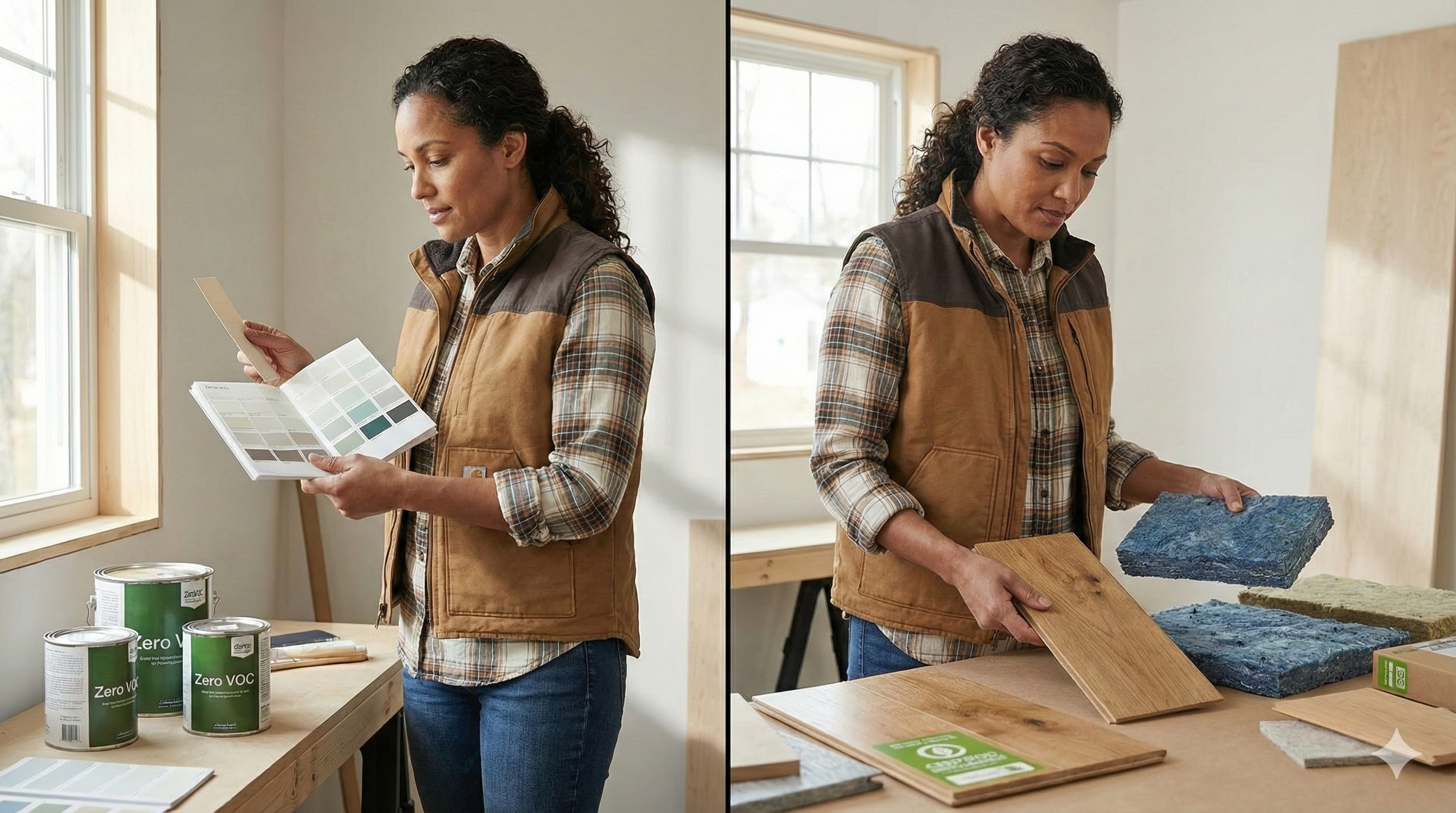
Hiring the right contractor can make or break your renovation—especially if you want energy-efficient, healthy, and sustainable results. Here's how to choose a contractor who aligns with your values, your budget, and your long-term goals for your home.
Introduction
Choosing a contractor is already challenging. Add sustainability to the mix—energy efficiency, indoor air quality, low-VOC materials—and it can feel overwhelming fast. But it doesn't have to be.
In Ontario, where heating and cooling can account for over 60% of a home's energy use, having the right contractor isn't just good for the planet. It improves comfort, reduces utility bills, and protects your long-term property value.
Whether you're planning a kitchen refresh, a bathroom remodel, or a whole-home improvement, here's how to confidently choose a contractor who truly understands sustainable, high-performance renovations.
1. Look for contractors with real sustainability knowledge
A sustainable renovation requires more than "eco-friendly" labels. Your contractor should understand the principles behind healthier, more efficient homes.
Key things to check:
- LEED-informed approach (not necessarily certified, but knowledgeable)
- Experience with energy-efficient materials and systems (LED lighting, insulation, low-flow fixtures)
- Understanding of Ontario climate performance needs (winter heat loss, summer humidity)
- Ability to explain why certain materials matter (e.g., low-VOC vs. standard paints)
Ask direct questions:
- "How do you improve indoor air quality during renovations?"
- "What insulation products do you recommend for a typical Ontario home—and why?"
- "How do you reduce material waste on-site?"
If they can't explain these things simply and clearly, that's a red flag.
2. Check what materials they use and what they avoid
Sustainable renovations start with better material choices. Your contractor should be able to guide you toward options that balance performance, aesthetics, and budget.
Look for contractors who:
- Recommend low-VOC or zero-VOC paints and adhesives
- Provide WaterSense-certified fixtures for bathrooms and kitchens
- Suggest durable materials that reduce replacement frequency
- Understand when to use recycled or reclaimed materials
- Avoid unnecessary demolition by keeping what can be reused or refinished
Ask:
- "Do you provide low-VOC options for primers, paints, and sealants?"
- "What water-saving fixtures do you typically install?"
A sustainable contractor should always tie material recommendations back to health, efficiency, and cost savings.
3. Ask about waste reduction and recycling practices
Renovations generate more waste than most homeowners expect. A responsible contractor has a clear plan for managing it.
Good sustainability practices include:
- Separating materials for recycling (wood, metal, cardboard, drywall)
- Donating usable items to reuse centers (cabinets, doors, fixtures)
- Minimizing unnecessary demolition
- Using precise material take-offs to reduce ordering waste
This approach lowers landfill impact, saves money, and keeps your project cleaner and more organized.
4. Verify licensing, transparency, and communication
Sustainability also means long-term reliability. A good contractor operates with clarity and professionalism.
Look for:
- Proper licensing and insurance in Ontario
- Clear written estimates detailing materials, labour, and allowances
- Realistic timelines (not too fast, not too slow)
- Transparent communication about delays or issues
- Willingness to provide references
A trustworthy contractor should never pressure you, cut corners, or avoid answering questions.
5. Choose contractors who design for long-term value
Sustainability isn't just about materials—it's about performance over time.
A high-quality contractor will:
- Recommend energy-efficient upgrades with ROI (air sealing, insulation, LED lighting)
- Consider moisture management, especially important in Ontario's humid summers
- Focus on durability and long-term maintenance costs
- Make design choices that reduce future replacements or repairs
- Suggest future-ready improvements (e.g., smart thermostats, efficient ventilation)
This approach reduces operating costs and increases resale value—something Ontario homeowners and investors appreciate.
Conclusion
Choosing a sustainable contractor doesn't have to feel complicated. Look for clear communication, real knowledge of energy-efficient practices, and a genuine commitment to healthier materials and long-term value. These qualities ensure your renovation is comfortable, efficient, and future-ready.
Thinking about a sustainable renovation? Book a free consultation with NENS EcoBuild today and let's plan a project that's better for your home—and the planet.