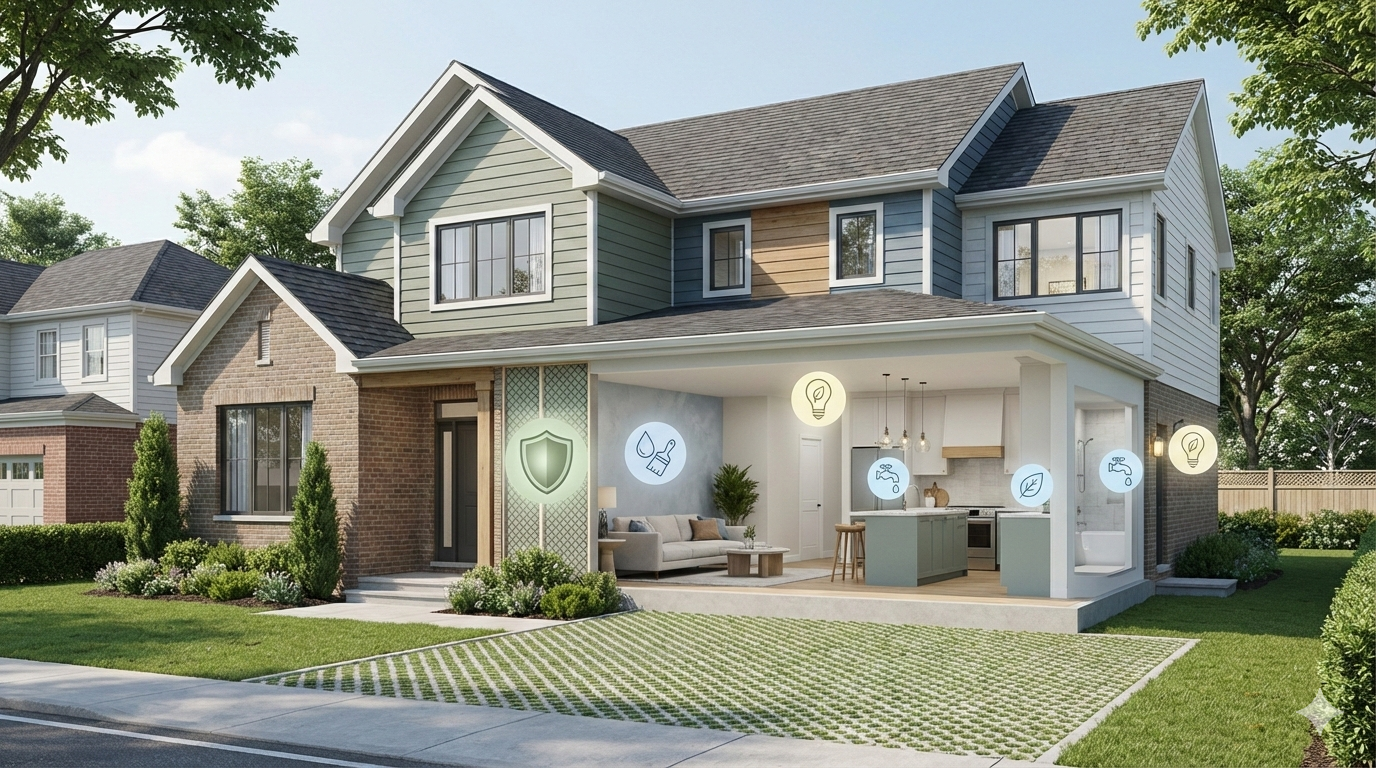
LEED isn't just for commercial buildings. Here's how LEED principles can make your home healthier, more efficient, and more comfortable—without complicating your renovation plans.
Introduction
If you've ever heard the term "LEED-certified building" and wondered what it really means—or whether it has anything to do with your home—you're not alone. Many homeowners assume LEED applies only to big commercial towers or government buildings. Not true.
LEED principles work beautifully in residential renovations, especially here in Ontario where seasonal extremes (cold winters, hot summers) make efficiency and comfort essential. Following LEED guidelines helps lower utility bills, improve indoor air quality, and create a home that feels better—without necessarily going through the full certification process.
At NENS EcoBuild, we use LEED-informed practices to guide smarter, healthier renovations for homeowners and small property investors. Here's what that means for you.
What LEED actually is (in simple terms)
LEED (Leadership in Energy and Environmental Design) is the world's most widely used green building standard. Think of it as a roadmap for designing and renovating buildings that use less energy, waste less water, and create healthier indoor spaces.
You don't need to certify your home to benefit from LEED. What matters is applying the principles:
- Use materials that protect health (low-VOC products, better insulation)
- Improve indoor comfort (better lighting, ventilation, air sealing)
- Reduce utility waste (efficient plumbing and electrical upgrades)
- Choose smarter construction methods (durable, high-performing materials)
LEED helps homeowners make informed, sustainable choices.
Why LEED matters for homeowners
Renovating with LEED principles improves your home in ways you can feel—both immediately and long-term.
1. Lower utility bills
Ontario's heating and cooling cycles are intense. LEED strategies reduce energy waste through improvements like:
- Air sealing and insulation
- Efficient lighting and appliances
- Smart thermostats
- High-performance windows
These upgrades cut monthly costs and increase resale value.
2. Healthier indoor air
LEED prioritizes materials that reduce toxins and irritants. This is especially important for families, seniors, and anyone with allergies.
Simple swaps make a big difference:
- Low- or zero-VOC paints and adhesives
- Formaldehyde-free cabinetry
- Better ventilation in kitchens and bathrooms
A healthier home starts with cleaner air.
3. Higher comfort and durability
Your home feels warmer in winter, cooler in summer, and quieter overall.
Better building practices also reduce future maintenance and unexpected repairs.
Practical LEED-inspired upgrades with the best payback
These improvements are easy to integrate into any renovation plan and deliver fast, measurable benefits.
1. Air sealing & insulation
One of the most cost-effective upgrades in Ontario homes.
Benefits: Lower heating bills, fewer drafts, more stable temperatures.
2. Efficient water fixtures
Look for WaterSense-labeled faucets, showerheads, and toilets.
Benefits: Lower water bills, consistent performance, less strain on plumbing.
3. Low-VOC paint and materials
Switching materials costs almost nothing extra but dramatically improves indoor air quality.
4. LED lighting & smart controls
A quick win for reducing electricity use and improving lighting quality.
5. Energy-efficient appliances
Especially valuable for rentals and investment properties—lower operating costs attract tenants and reduce vacancies.
How LEED fits into your renovation plan
LEED isn't a rigid set of rules. It's a flexible approach that adapts to your goals and your budget.
When NENS EcoBuild applies LEED-informed strategies, we focus on:
- Your priorities (comfort, resale value, lower bills, long-term durability)
- Your property's condition (insulation gaps, old plumbing, inefficient lighting)
- Ontario climate needs (cold winters, heat waves, humidity control)
- Budget-friendly improvements that deliver real results
Whether you're refreshing a bathroom, redoing your kitchen, or renovating an entire unit, LEED gives structure and confidence to your decisions.
Bottom line: LEED makes homes better
You don't need to certify your home to enjoy the benefits of LEED. Using its principles during renovations helps you:
- Reduce energy and water bills
- Improve indoor comfort
- Create a healthier space
- Add long-term property value
- Make renovation decisions with clarity and purpose
If you want your home to feel better, cost less to operate, and support a healthier environment, LEED gives you the roadmap.
Thinking about a renovation? Book a free consultation with NENS EcoBuild today and discover how LEED-informed practices can improve your home.